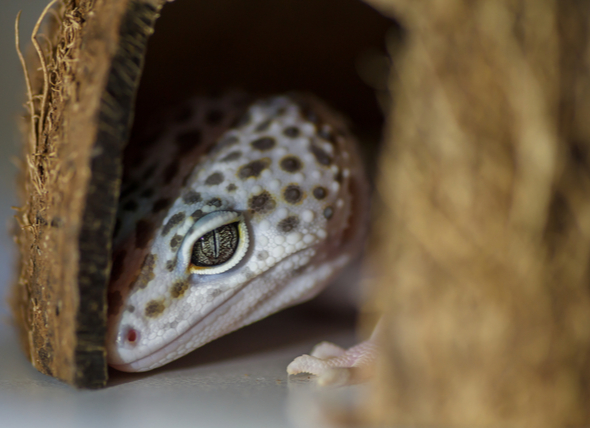
In addition to enclosures that are too cold and eye problems that prevent them from seeing their food, there are other potential reasons why leopard geckos stop eating.
Impacted stool
Fecal impaction in leopard geckos is often associated with recent consumption of a large or hard meal, such as one with lots of super worms. It could also be caused by accidental ingestion of their bedding material. Urate plugs are also potential causes of impacted feces. If a leopard gecko hasn’t eliminated recently, try soaking the animal in a warm bath at least twice a day and gently massaging its belly while the gecko is submerged in hip-deep water. In some cases, your veterinarian may find it necessary to give an enema to the gecko to encourage defecation.
Illness
A respiratory infection is the most common medical problem that can cause reptiles to stop eating. There is a need to bring your pet to the vet so the underlying cause can be identified and appropriate medication can be given.
Injury
Pain and discomfort brought about by an injury may cause leopard geckos to stop eating. Your recommended vet Middletown DE may prescribe some pain medications to alleviate the pain and make the gecko feel better so it would start eating.
 Helalth Care