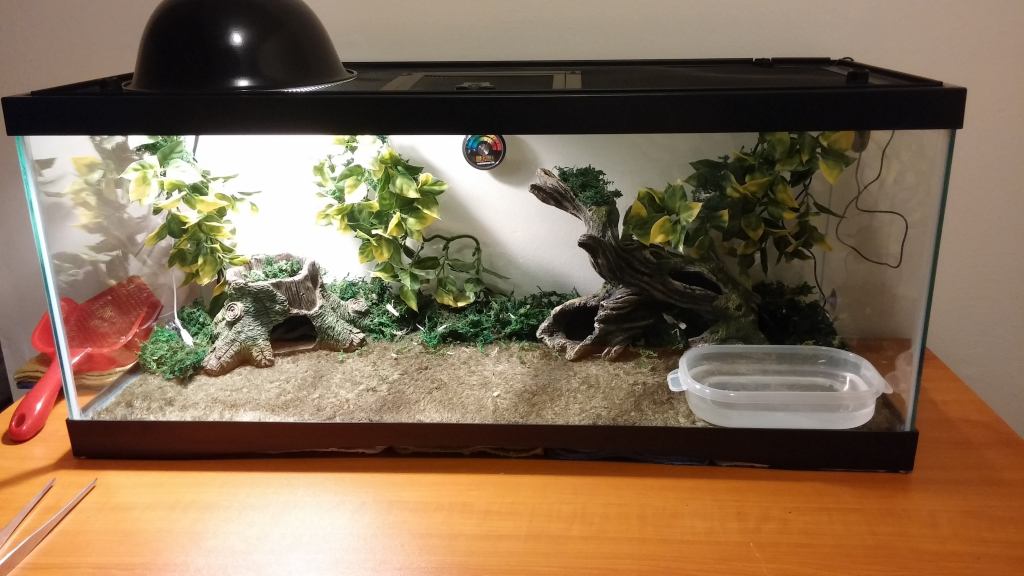
Like other reptiles, lizards, being cold-blooded, rely on the surrounding air temperature to control their body heat. This would mean that the keeper will be the one responsible to ensure the pet lizard’s warmth. This kind of temperature monitoring is better managed in a vivarium, a somewhat enclosed environment built with cold-blooded animals in mind. Because these do not require water like the turtle enclosures, vivariums can be fitted with sliding glass doors or some other simple to maintain transparent material. Grilles can also be affixed for better ventilation.
The vivarium layout will depend on the pet lizard, whether the species’ natural habitat be a desert or a forest. An ideal substrate for lizards that reside in the desert is calcium sand. This will not hurt the animal if in case it swallows a bit of the sand with the food. For lizard species that reside in the forests, chipped bark seems like a good choice. Larger bark pieces, branches, and real plants make good hiding areas when the animal needs to. The lizard keeper has to ensure that the chosen plants are non-toxic and lizard-friendly. Also, there is this risk that the real plants might be fed on by a lizard that is herbivorous. For lizards that are tree-dwellers, having the vivarium to be taller than it is wide and then filled with branches or various other climbing objects will be ideal. You can use peat moss inside the vivarium and then misted every so often to manage the level of humidity.
Any concern you may have about your pet should be brought to the attention of your veterinarian Michigan City, IN.
 Helalth Care