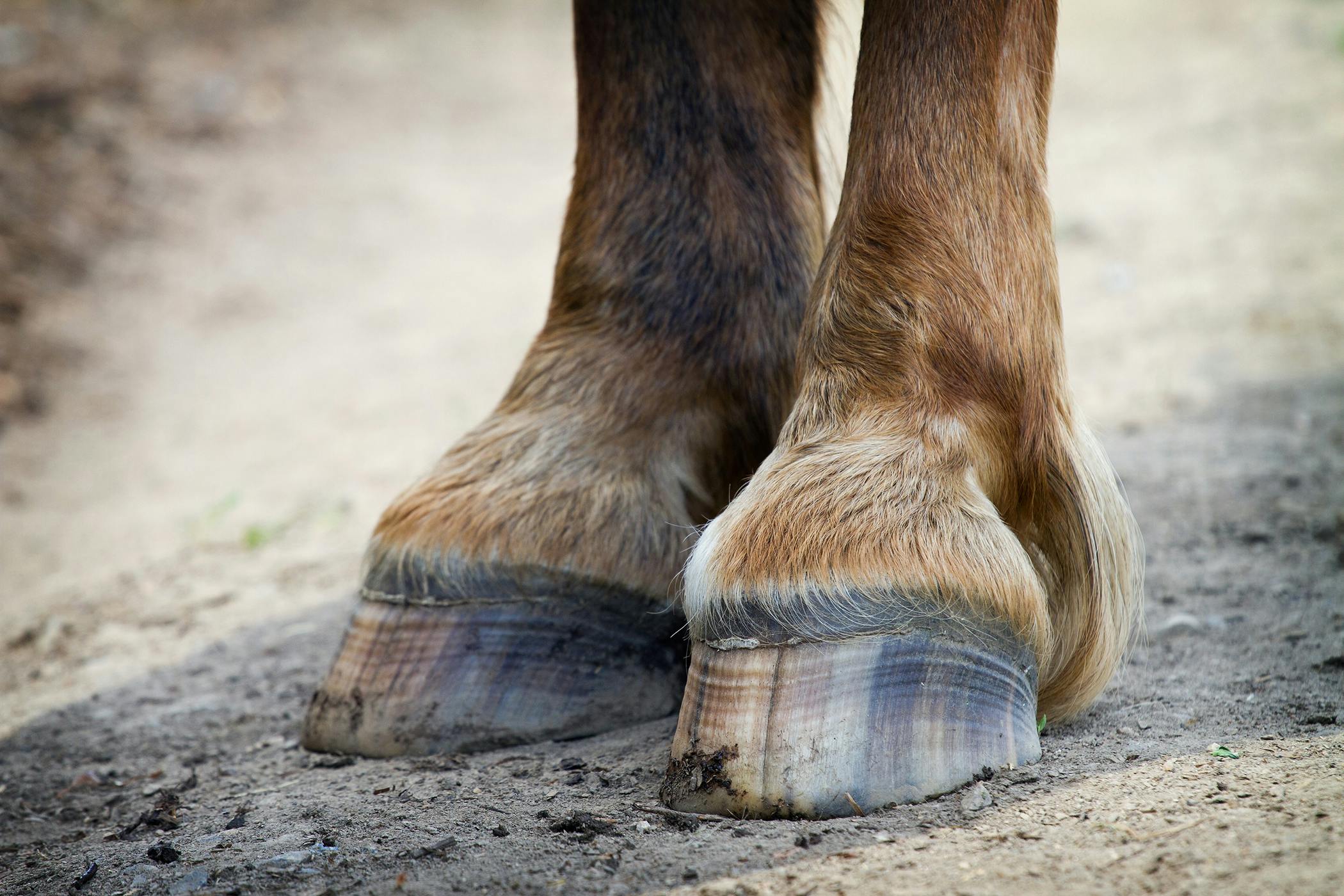
If you closely observe the hooves of your horse prior to and after riding, you might sometimes see cracks or chips along the hoof wall. This wall is a lot like a toenail or a fingernail. It is composed of keratin and protects the inner structures that make up the horse’s hoof from infection, moisture, and hard surfaces.
For the most part, the hoof wall’s superficial and small cracks and chips are cosmetic, not needing any treatment, but they could also be an indicator that there is not enough moisture or too much exposure to the horse’s hooves. They could also be because of some minor injury.
Kinds Of Cracks To Hooves
Vertical and superficial cracks that start near the ground are known as “grass cracks.” These are not normally painful and do not cause lameness.
Vertical cracks that begin at the coronary bands are called “sand cracks.” Usually, they are caused by traumatic injuries or too much stress to the coronary bands. Sometimes these might cause lameness.
Horizontal cracks could be brought about by abscesses that sometimes burst along the coronary band. This causes a gap to grow into the walls of the hoof. These resulting cracks do not typically cause lameness, but the injury that caused the cracks might have.
The severity, depth, and location of the crack are factors that are considered by your farrier or veterinarian Wichita, KS to determine if a patch is needed. They might also recommend wiring together or cutting out the crack for help in stabilization as it continues to grow out. Click here.
 Helalth Care