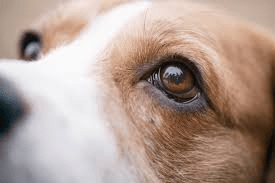
The aqueous/liquid, oil, and mucoid sections of the tear film are the three parts of the tear film.
The glands in the top and lower lids are where the oil component is produced. From the conjunctiva, the mucoid portion is derived (the white portion surrounding the eye). Two lacrimal glands—one placed over the eye and one in the third eyelid—produce the tear component.
The likelihood of a dry eye, which is caused by insufficient tear production, increases whenever the 3rd eyelid is perforated or injured. Around 40% of eyes with cherry eyes will eventually lose the capacity to make fluids from that gland, resulting in a dry eye if untreated. In addition to being painful, dry eyes can be at risk of developing infections including corneal injury.
The third eyelid not only produces a fraction of the lacrimal gland but also shields the eyeball from irritants and injuries.
What Leads to a Cherry Eye or Ruptured Third Eyelid?
A Cherry Eye’s underlying source is unknown. There is evidence that cherry eye has a hereditary component, and numerous breeds are heavily represented in cases of the condition.
Take a proactive approach to your pet’s health with regular health and wellness checks at your veterinary hospital Dawsonville, GA.
 Helalth Care