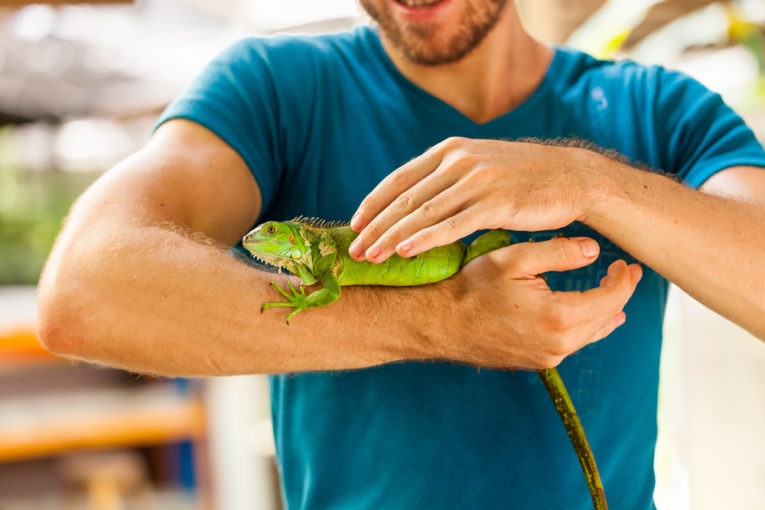
Reptiles and amphibians are generally not fond of handling and should be approached with caution. Some may become accustomed to it over time, but most will not. Careful handling is always necessary, even when checking their condition.
Their skittish behavior is partly due to poor eyesight, as they often live in dark, burrowed, or shaded habitats where they hunt their prey. Most snakes, except for one genus, cannot focus their eyes by changing the lens shape, instead they must move the lens back and forth like a camera lens, which is less efficient and makes them highly sensitive to movements.
Pet reptiles need special care and handling to ensure their well-being. Here are some precautions to consider:
- Proper equipment: Ensure you have the proper equipment for handling your pet reptile, such as gloves or tongs to avoid bites or scratches.
- Environment: Reptiles are sensitive to temperature and humidity levels, so be sure to maintain the proper environment.
- Health: Check your pet regularly for signs of illness, such as lethargy, loss of appetite, and changes in skin or scales.
- Diet: Proper diet is crucial to the health of reptiles, so be sure to provide a balanced diet of appropriate foods.
- Handling: Handle pet reptiles carefully and slowly to reduce stress and prevent injury. Never grab them by the tail, as it can easily break.
- Quarantine: If introducing a new reptile to your existing collection, quarantine the new reptile for a minimum of 30 days to prevent the spread of disease.
- Professional help: If you have any doubts about the care and handling of your pet reptile, consult a veterinarian or reptile specialist for guidance.
Your veterinarian Seminole, FL is a valuable resource regarding your pet’s health and needs.
 Helalth Care